
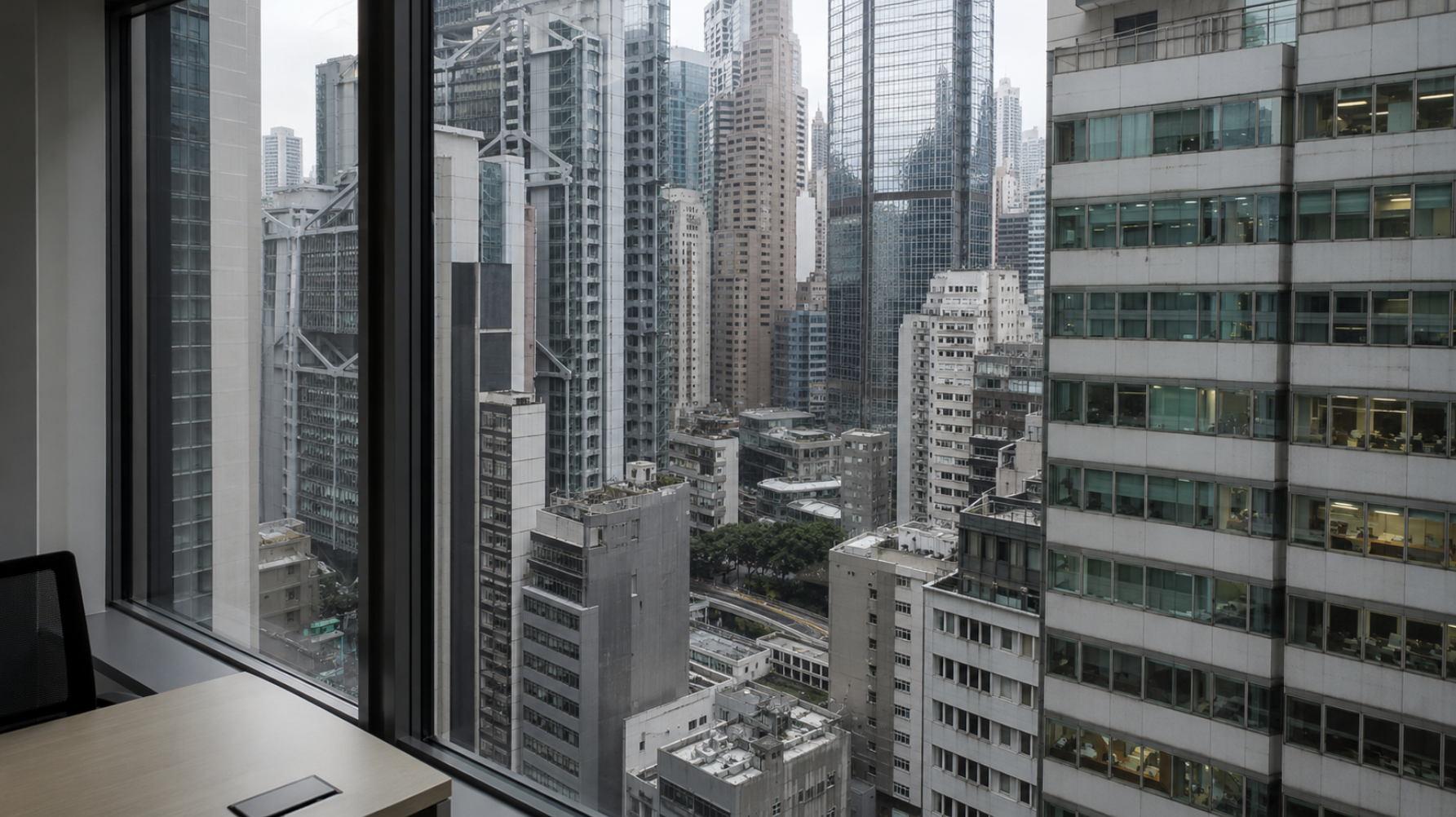
Hong Kong’s compactness is more than a visual impression. Government figures put the territory’s land area at about 1,114.57 square kilometres, with a mid-2025 population of roughly 7.5 million and an average density of 6,870 people per square kilometre. In a core business district such as Central, space is no longer just a container for desks; it is an asset that needs to be managed precisely.
That pressure is visible in rent. Grade-A Central office rents rose 7.3% in the first half of 2026; landmark buildings such as One IFC and Two IFC were above HKD 130 per square foot per month, while Central’s vacancy rate fell to 8.8% at the end of June. At HKD 130 as an illustration, a 500-square-foot office represents about HKD 65,000 in basic monthly rent, or HKD 780,000 a year before management fees, rates and fit-out.
CBRE’s 2015 workplace research recorded Hong Kong workstation allocations falling from about 100 square feet to 50–60 square feet, a range it described as a productivity danger zone when it drops below 60. Compact-office design therefore needs to move more functions from the floor to the wall, rather than only shrinking desks and corridors.
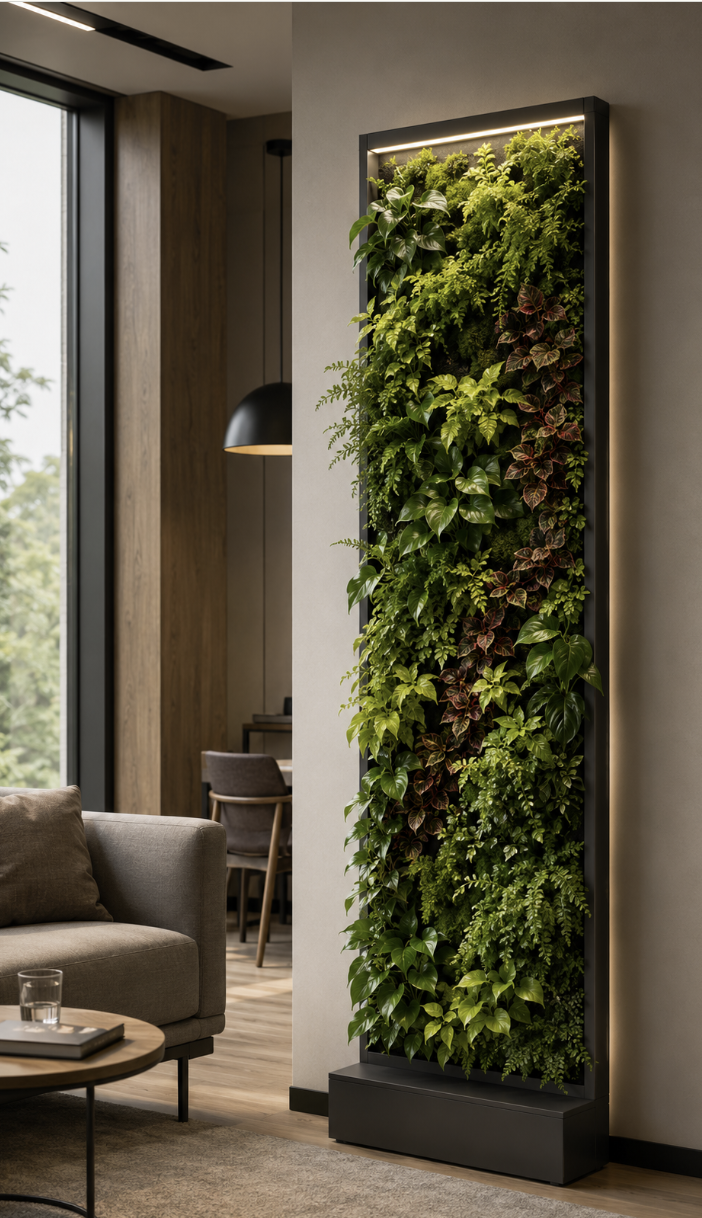
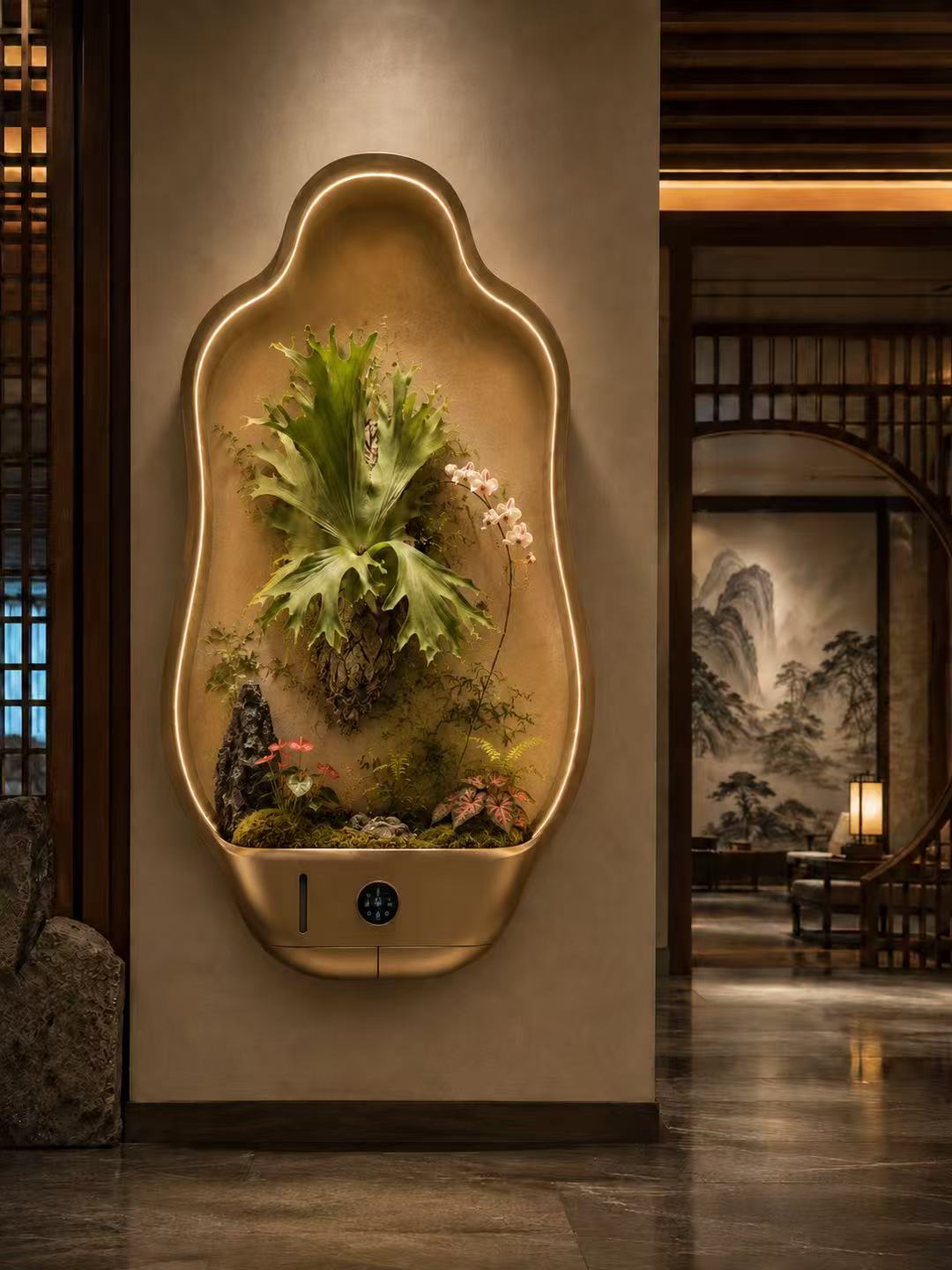
That is the starting point for CANVIVA. A standard module of roughly 550 mm wide by 2,400 mm high can form a 1.32-square-metre vertical planting face for about 45 plants—about 34 plants per square metre—integrating planting, Xponge growth media, circulation, lighting and structure without a large planter or green island.
Compact space also changes faster: concentrated occupancy, long air-conditioning hours and limited natural ventilation can move temperature, humidity and carbon dioxide over the course of a day. Where monitoring is included in the agreed scope, relevant readings can be connected to plant records, inspections, actions and service history.
CANVIVA’s operating target is routine on-site care about once a month, with continuous monitoring filling the information gap between visits. Planned AI analysis will support anomaly recognition, risk alerts, care guidance and scheduling; it assists horticulturists and facilities teams rather than replacing them.
Hong Kong’s Indoor Air Quality Certification Scheme has Excellent and Good levels, with certificates valid for 12 months. Project operations readings, where configured, support daily care and trend prompts; they do not replace formal IAQ testing by a recognised body, and plants are not described as a substitute for mechanical ventilation.
CANVIVA is not another decorative object in a compact office. It turns an underused vertical interface into living, maintainable and monitorable spatial infrastructure—creating more long-term value from limited space.